Great E-commerce & Online Store Name Ideas 2026 combine a clear niche signal, an easy-to-spell word, and an available domain. The fastest formula: pick one core product word, blend it with a short, punchy modifier (like “Nova,” “Hive,” or “Loop”), then confirm the name is free on a domain availability search, social media, and the USPTO trademark search before you commit.
Introduction
Picking the right E-commerce & Online Store Name Ideas is one of the first real decisions that shapes how customers see your brand. A strong name does more than sound nice — it signals trust, sticks in memory, and makes it easier to build an eCommerce site people actually return to. Whether you plan to start dropshipping now without inventory or launch a niche boutique, this guide walks through proven naming patterns, 150+ ready-to-use ideas, and the exact steps to lock in your domain and legal rights before another founder grabs them first.
Why Choosing a Great E-commerce Business Name Matters for 2026 Success
Your store name is the first handshake with a shopper. Before they read a product description or see a review, they read your name — and in that split second, they decide whether your brand feels professional, trustworthy, or forgettable. A weak or generic name adds friction to every marketing dollar you spend afterward.
In 2026, competition for attention is fiercer than ever. Paid ads cost more, organic reach is harder to earn, and shoppers scroll fast. A unique eCommerce business name cuts through that noise because it’s easier to remember, easier to say out loud, and easier to search for again later — which directly improves repeat visits and word-of-mouth referrals.
Naming also affects practical, everyday business tasks. A clear, niche-relevant name helps you secure the relevant handles on social media, simplifies your eCommerce domain name registration, and reduces legal risk down the road. Among the many small business challenges owners face in 2026, rebuilding a brand after a naming mistake is one of the most expensive and time-consuming to fix.
Catchy eCommerce business names also support SEO. Search engines and shoppers alike respond well to names that hint at what you sell, especially when paired with a matching domain and consistent branding across every channel — from your homepage to your packaging.
| Reason | Business Impact |
| Memorability | More repeat visits, stronger word-of-mouth |
| Niche clarity | Faster customer understanding, higher conversion |
| Domain match | Easier SEO, simpler eCommerce domain name registration |
| Legal safety | Avoids costly rebrands or trademark disputes |
| Social availability | Consistent branding across every platform |
Naming Patterns from Iconic E-commerce Brands (And the Stories Behind Them)
Studying iconic e-commerce brand names and the stories behind them reveals repeatable formulas you can borrow for your own shop. Most famous eCommerce business names fall into a handful of clear patterns rather than being random inventions.
1. The Metaphor Pattern: Amazon was named after the world’s largest river — a name that cleverly involves the size and scale the founder imagined for the company, long before it became reality. The metaphor set an ambitious tone from day one.
2. The Word-Blend Pattern: Shopify blends “shop” with a friendly, techy suffix, instantly telling visitors what the platform does while still sounding modern and brandable.
3. The Personal-Meaning Pattern: Etsy’s founders reportedly liked the sound of the word and its Italian-language playfulness — proving a name doesn’t need a literal meaning to feel authentic and memorable.
4. The Descriptive-Playful Pattern: Wayfair combines “way” (journey, direction) with “fair” (marketplace), hinting at variety and discovery without being a boring literal descriptor.
5. The Abstract-Invented Pattern: Zappos was built from “zapatos,” the Spanish word for shoes, slightly altered to be unique, ownable, and trademark-friendly.
| Brand | Naming Pattern | Takeaway for You |
| Amazon | Metaphor | Pick a name that implies scale or ambition |
| Shopify | Word-blend | Combine your niche word with a modern suffix |
| Etsy | Personal/phonetic | Sound and feel can matter more than meaning |
| Wayfair | Descriptive-playful | Blend function with imagination |
| Zappos | Abstract-invented | Alter a real word to make it ownable |
These patterns work because they balance clarity with creativity — a lesson worth applying whether you’re naming a fashion boutique or a Shopify and dropshipping store.
Catchy E-commerce & Online Store Name Ideas (By Popular Retail Categories)
Below is a curated bank of eCommerce business name ideas organized by category. Treat these as starting points — tweak spelling, add a modifier word, or combine two entries to make something truly your own before you check availability.
Beauty & Skincare Store Names
| # | Name | # | Name |
| 1 | GlowNest | 9 | PureRadiance Co. |
| 2 | Skinly | 10 | Dew Drop Beauty |
| 3 | Velvet Bloom | 11 | BareCanvas |
| 4 | Luxe Petal | 12 | Skinovate |
| 5 | Blush & Bare | 13 | GlowMint |
| 6 | Radiant Roots | 14 | Faceform |
| 7 | The Dewy Co. | 15 | Skinwell Studio |
| 8 | Aurelis Skin | 16 | Clarity Beauty Bar |
Home & Decor Store Names
| # | Name | # | Name |
| 17 | Nestwell Home | 25 | Cozy Corner Co. |
| 18 | Hearthlane | 26 | Loomwood Living |
| 19 | Havenly Decor | 27 | The Warm Nook |
| 20 | Driftwood & Co. | 28 | Homestead Roots |
| 21 | Casaluxe | 29 | Willow & Frame |
| 22 | Sunlit Spaces | 30 | Terra Home Co. |
| 23 | Cabinly | 31 | The Cozy Hive |
| 24 | Nordic Nest | 32 | Roomly |
Food & Beverage Store Names
| # | Name | # | Name |
| 33 | Harvest Crate | 41 | Brewly |
| 34 | SnackNest | 42 | Roast & Root |
| 35 | Pantry Pulse | 43 | GrindHouse Coffee |
| 36 | FreshFold Foods | 44 | The Daily Sip |
| 37 | Crumb & Co. | 45 | SpiceLoop |
| 38 | Vine & Table | 46 | Batch & Barrel |
| 39 | The Honest Bite | 47 | Steep & Stir |
| 40 | Kettlefare | 48 | Farmly Crate |
Fitness & Wellness Store Names
| # | Name | # | Name |
| 49 | FlexNest | 57 | PulseForm Fitness |
| 50 | Ironhive | 58 | Corewell Studio |
| 51 | ThriveGear Co. | 59 | Vitalfit |
| 52 | The Grind Set | 60 | Movement Lab |
| 53 | Solace Wellness | 61 | Groundwork Fitness |
| 54 | FormFlex | 62 | Steadfast Athletics |
| 55 | Zenith Gear | 63 | Balanced Roots |
| 56 | Ridgeline Fit | 64 | Ampwell |
Pet Products Store Names
| # | Name | # | Name |
| 65 | Pawsly | 73 | Furrow Supply Co. |
| 66 | Tailwag Trading | 74 | Whisker Nest |
| 67 | Barkwell | 75 | Loyal Paws Co. |
| 68 | The Wagging Crate | 76 | Snoutly |
| 69 | Furbloom | 77 | Petnest Supply |
| 70 | Companion Crate | 78 | Muttly Market |
| 71 | Pawgrove | 79 | Woof & Willow |
| 72 | Clawsy | 80 | The Furry Fix |
Jewelry & Accessories Store Names
| # | Name | # | Name |
| 81 | Lumina Jewels | 89 | Gilded Nest |
| 82 | Ember & Stone | 90 | Charmly Co. |
| 83 | The Silver Fold | 91 | Amara Jewels |
| 84 | Velvet Charm | 92 | Sparklane |
| 85 | Wrenlyn Jewelry | 93 | The Gem Nook |
| 86 | Ivory & Stone | 94 | Facet & Fold |
| 87 | Clasp & Chain | 95 | Muse Jewelry Co. |
| 88 | Gleamora | 96 | Petal & Stone |
Kids & Baby Store Names
| # | Name | # | Name |
| 97 | Little Nest Co. | 105 | Tiny Tumble |
| 98 | CuddleCrate | 106 | Bloomly Baby |
| 99 | PlayNook | 107 | Sprout & Snug |
| 100 | Snugbug | 108 | LullabyLoop |
| 101 | Wobblewear | 109 | Kindred Kids Co. |
| 102 | Pitter Patter Shop | 110 | Tumbleweed Tots |
| 103 | Giggle Grove | 111 | Cloudlet Baby |
| 104 | RascalWear | 112 | Nestling Co. |
General & Multi-Niche Store Names
| # | Name | # | Name |
| 113 | Everdine Market | 121 | Wanderly Goods |
| 114 | The Curated Nook | 122 | Marketloop |
| 115 | Bramblewick Co. | 123 | Novaline Shop |
| 116 | Trove & Co. | 124 | Kindled Market |
| 117 | Shoply Hub | 125 | Everly Goods |
| 118 | The Daily Find | 126 | Foundry Market |
| 119 | Bazaarly | 127 | Wildbloom Co. |
| 120 | Craftnest Market | 128 | Loomly Goods |
These lists work as a launchpad for any niche, including a dropshipping store name, a handmade goods shop, or a multi-category eCommerce website builder storefront. For inspiration on how naming trends are evolving across new-age businesses, see our breakdown of tech startup branding trends.
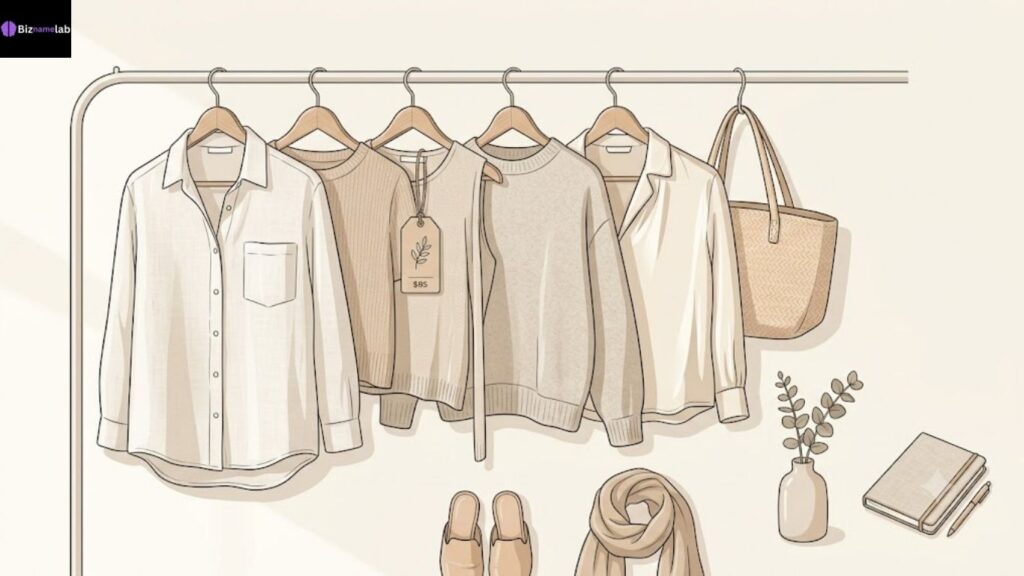
Minimalist Fashion & Clothing Boutique Name Ideas
Minimalist fashion brands lean on short, clean names — often one or two syllables — that feel timeless rather than trendy. The goal is a name that looks as good on a small logo tag as it does on a billboard.
| # | Name | Style Note |
| 129 | Linenova | Fabric + modern suffix |
| 130 | Muse & Thread | Elegant, editorial feel |
| 131 | Bare Form | Clean, minimal aesthetic |
| 132 | Solstice Wear | Seasonal, calm tone |
| 133 | The Quiet Closet | Understated luxury |
| 134 | Fold & Form | Structure-focused |
| 135 | Ashgrove Studio | Earthy, boutique-style |
| 136 | Neutral Thread Co. | Direct niche signal |
| 137 | Vesper Wear | Soft, poetic sound |
| 138 | The Minimal Rack | Straightforward and clear |
| 139 | Linenwick | Fabric-inspired blend |
| 140 | Draped & Bare | Texture-focused imagery |
Why these work: each name avoids clutter, mirrors the visual simplicity of a minimalist wardrobe, and stays short enough to fit cleanly on packaging, hang tags, and a mobile screen — where most shoppers will first meet your brand.
Trending Tech Gadgets & Electronic Online Shop Names
Tech and gadget brands benefit from names that feel fast, futuristic, and confident. Sharp consonants, short vowels, and invented word-blends tend to perform best in this space.

| # | Name | Style Note |
| 141 | Nexlo Tech | Modern, invented blend |
| 142 | CircuitNest | Niche-clear + friendly suffix |
| 143 | Voltique | Energy-themed, sleek |
| 144 | Gizmo Grove | Playful yet clear |
| 145 | Byteform | Tech-forward blend |
| 146 | Pulsegear | Implies performance |
| 147 | Chipwell | Approachable, techy |
| 148 | ZenithTech Co. | Ambitious, premium tone |
| 149 | GadgetLoop | Descriptive and catchy |
| 150 | Voltnest | Energy + community feel |
| 151 | Fusionware | Suggests innovation |
| 152 | Sparklane Tech | Bright, memorable |
Names like these work well for both a physical gadget shop and a fully digital storefront built through an eCommerce website builder, since they carry the same energy across a logo, app icon, and social profile picture.
Smart Tips to Choose the Perfect E-commerce Business Name
Picking from a list is only step one. Use these practical filters before you fall in love with any single option.
- Keep it short and easy to spell. Long or oddly-spelled names get mistyped in search bars and lost in conversation. Aim for one to three syllables whenever possible.
- Say it out loud. If it’s hard to pronounce clearly on a phone call or podcast mention, shoppers will struggle to search for it later.
- Check how it looks as a domain. A name that reads fine in a sentence can look confusing squeezed into a URL — always view it as one continuous string first.
- Think five years ahead. Avoid trend-specific words that could date your brand quickly, especially if you plan to expand beyond your first niche.
- Test it with real people. Ask five strangers to spell it back after hearing it once. If most get it wrong, simplify.
- Match tone to audience. A luxury jewelry shop and a budget gadget store shouldn’t sound the same — tone should match price point and customer expectations.
- Confirm cross-platform availability. Before finalizing anything, secure the relevant handles on social media so your branding stays consistent everywhere shoppers might find you.
Tools like the Wix Business Name Generator can speed up early brainstorming by combining your keywords into hundreds of variations in seconds — useful for breaking creative blocks before you narrow your shortlist manually.
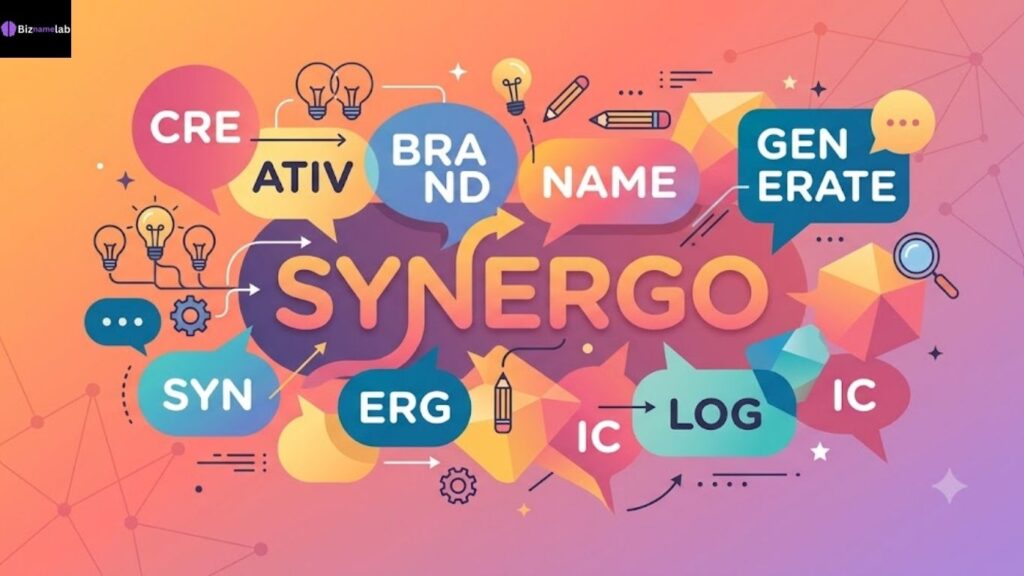
The Word-Blend Formula: Creating Brandable Names for Shopify & Dropshipping
Many of today’s most brandable names for Shopify stores use a simple, repeatable formula: combine a real, relevant word with a short invented or foreign-language modifier.
The formula: [Core Product/Emotion Word] + [Short Modifier] = Brandable Name
For example, “Glow” (skincare) + “Nest” (community/home feel) becomes “GlowNest.” Or “Pulse” (energy) + “Form” (fitness) becomes “PulseForm.” This structure keeps names niche-relevant while still sounding original enough to trademark and brand confidently.
| Core Word (Niche Signal) | Modifier (Brand Flavor) | Result |
| Glow, Bloom, Skin | Nest, Mint, Well | GlowNest, Bloomwell |
| Pulse, Flex, Core | Form, Fit, Well | PulseForm, Coreflex |
| Byte, Circuit, Volt | Tech, Nest, Ware | Byteform, Voltnest |
| Nest, Loom, Hearth | Home, Wood, Lane | Hearthlane, Loomwood |
This word-blend method is especially useful if you plan to start dropshipping now without inventory, since a flexible, brandable name lets you pivot product lines without needing a full rebrand later. It also works well if you’re exploring how to start a print-on-demand business, where your name often becomes the entire visual identity printed on every product.
E-commerce Domain Name Registration: Why Matching Your Title Matters
Once you’ve shortlisted a name, eCommerce domain name registration should happen almost immediately — great names get purchased by other buyers faster than most founders expect.
A matching domain builds instant trust. When your business name and website URL are identical, customers feel confident they’ve landed on the right, legitimate site rather than a lookalike or scam page. Mismatched names and domains create hesitation at checkout — exactly when you need the least friction.
Best practices for domain selection:
- Avoid numbers and hyphens in domain names; they’re harder to say aloud and easy to mistype.
- Favor a .com extension when available, since it remains the most trusted extension for US shoppers.
- If your exact name is taken, add a short, relevant word (like “shop,” “co,” or “store”) rather than altering the spelling.
- Register common misspellings or close variations if your budget allows, redirecting them to your main site.
According to Wix’s guidance on choosing a business name, aligning your brand name with your domain early on strengthens both memorability and long-term SEO performance, since search engines and customers both reward consistency across the two.
If you’re ready to make a website using Wix, or any other eCommerce website builder, confirm domain availability before you finalize your logo, packaging, or paid ad campaigns — reversing that order gets expensive fast.
Legal Checks: How to Verify If Your Online Store Name is Available
A catchy name is worthless if someone else legally owns it. Before you print a single business card, run these checks in order.
- State business registry search. Confirm no other company in your state is already registered under the same or a confusingly similar name.
- USPTO trademark search. Use the U.S. Patent and Trademark Office’s public database to verify your e-commerce title isn’t taken at the federal level, especially if you plan to sell nationwide.
- Domain availability search. Confirm your preferred domain (and close variations) are unregistered using any accredited domain registrar.
- Social media handle check. Search each major platform manually; a name can be legally clear but already claimed on Instagram or TikTok.
- Google search test. A quick search reveals whether the name is already associated with an unrelated brand, which could hurt your future SEO rankings.
The USPTO’s official trademark search tool is the most reliable starting point for this process, since it covers registered and pending marks across the country in one searchable database.
| Check | Where to Search | Why It Matters |
| State registration | Secretary of State website | Avoids local legal conflicts |
| Trademark search | USPTO database | Prevents federal infringement claims |
| Domain availability search | Domain registrar | Secures your web address |
| Social handles | Each platform directly | Keeps branding consistent |
Skipping any one of these steps is one of the quiet small business challenges owners face in 2026 — the cost of a name conflict discovered after launch is almost always higher than the hour it takes to check upfront.
Common Naming Mistakes That Can Ruin Your Store’s Conversion Rate
Even a creative name can quietly hurt sales if it falls into one of these common traps.
- Being too vague. Names with no niche signal force shoppers to work harder to understand what you sell, increasing bounce rate.
- Copying a competitor too closely. Similar-sounding names confuse customers and open the door to legal disputes.
- Choosing something hard to spell. If customers can’t find you again through search, you lose repeat traffic and referral value.
- Ignoring domain and handle availability. A beautiful name is useless if you can’t secure a matching eCommerce domain name registration or social profile.
- Overusing trendy slang. Words that feel current today can sound dated within a year or two, forcing an early rebrand.
- Skipping the trademark search. Building a brand around a name you don’t legally own risks a costly, disruptive rename later.
Shopify’s own guidance on domain selection echoes several of these points, noting that a clear, simple name-and-domain pairing consistently outperforms clever-but-confusing alternatives in real customer testing.
Conclusion: Ready to Launch? Turn Your Store Name Idea Into a Profitable Business
The right name is more than a label — it’s the foundation every future marketing decision will build on. Use the eCommerce business name ideas and formulas in this guide as a starting point, then filter your shortlist through sound, spelling, domain availability, and legal checks before committing.
Once your name is locked in, move quickly: register your domain, secure your social handles, and file your trademark search paperwork. From there, you’re ready to build an eCommerce site that reflects a name customers will actually remember, search for, and recommend. For more naming inspiration and branding resources, visit BizNameLab.
Key Takeaways
- A strong name improves memorability, SEO, and trust — directly affecting conversion rates.
- Iconic brands like Amazon, Shopify, and Zappos follow repeatable naming patterns you can copy.
- The word-blend formula (niche word + short modifier) creates brandable, flexible names.
- Always run a domain availability search, social handle check, and trademark search before finalizing.
- Avoid vague names, trendy slang, numbers, and hyphens in your domain.
E-commerce Business Name Ideas FAQ
Why is choosing the right e-commerce business name so important?
Your business name shapes first impressions, builds trust, and directly affects how easily customers find and remember your store. A poorly chosen name increases marketing costs and makes repeat traffic harder to earn over time.
Should my business name reflect my specific e-commerce niche?
Generally, yes. A name with a clear niche signal — like “GlowNest” for skincare — helps shoppers instantly understand what you sell, which improves click-through rates and reduces confusion at checkout.
How do I know if my online store name is legally available in the US?
Run a trademark search through the USPTO’s public database, check your state’s business registry, and confirm your domain and social handles are unclaimed. Completing all four checks before launch avoids costly legal conflicts later.
Should my e-commerce business name and domain name be exactly the same?
Ideally yes, since matching names build trust and simplify SEO. If your exact name isn’t available as a domain, add a short relevant word like “shop” or “co” rather than changing the spelling of your core name.