The best real estate business names combine a memorable core word (a surname, place, or trait) with an industry term like “Realty,” “Estates,” or “Group.” A name that sounds established — rather than trendy — helps you win high-ticket deals, rank on Google Maps, and build long-term realty brand identity with buyers and sellers.
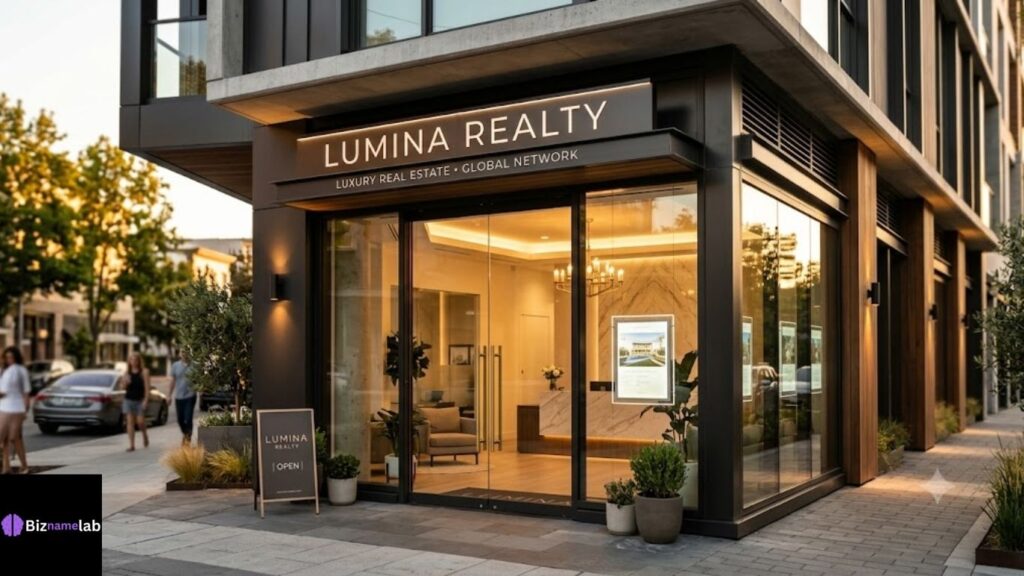
Table of Contents
- The Trust Factor: Why Your Real Estate Name Dictates High-Ticket Deals
- 120+ Established Real Estate Business Name Ideas for 2026
- Real-Life Case Studies: Why Famous Real Estate Brands Command Trust
- How to Choose a Real Estate Name That Scales with Your Portfolio
- Crucial Naming Mistakes That Drive High-Value Clients Away
- Maximizing ROI: How Your Name Impacts Local SEO & Google Maps Ranking
- Next Steps: Securing Your Real Estate Brand Identity
- Real Estate Naming FAQs
Introduction
Picking real estate business names feels small until you realize it’s the first thing every client judges before they trust you with a six-figure decision. A weak name quietly costs you referrals, ad clicks, and repeat business. This guide breaks down what actually builds an established brand identity & trust factor, walks through 120+ name ideas across luxury, commercial, community, and PropTech and real estate investment firms, and shows you how to protect the name once you pick it — so your brokerage is built to scale, not just to launch.
The Trust Factor: Why Your Real Estate Name Dictates High-Ticket Deals
Real estate is a trust business before it’s a sales business. Buyers hand over life savings. Sellers hand over their biggest asset. Before a prospect reads a single review, your name has already made a first impression — and that impression shapes whether they call you or scroll past.
A name that sounds temporary, cutesy, or hard to spell quietly signals risk. A name that sounds established signals the opposite: longevity, competence, and the kind of firm that handles high-ticket property transactions without drama. This matters most in commercial real estate brokerage and luxury residential work, where clients are vetting you the same way they’d vet a law firm or a bank.
Here’s the practical effect. Agents with a polished, professional name tend to see:
- Higher perceived credibility on first contact, before any track record is shown
- Better recall when a past client refers a friend six months later
- Stronger positioning against national franchises competing in the same zip code
- Easier expansion into new services (property management, development) without a name that boxes you in
Your name is also doing SEO work. Google reads business names as a relevancy signal for local search, and a name that’s easy to say out loud is a name people actually search for by, well, name. That’s free brand-search traffic you can’t buy.
120+ Established Real Estate Business Name Ideas for 2026
Use this list as a starting point, not a final answer. Treat each name as a template — swap in your city, surname, or specialty to make it yours, then run it through a trademark search for real estate before you commit. If you’d rather generate variations automatically, a real estate company name generator can help you test combinations faster.
Luxury & High-End Property Group Names (Prestigious & Premium)
Built for agents working a luxury residential and commercial portfolio, where the name has to carry weight before the listing photos even load.

- Meridian Estates Group
- The Sovereign Property Collective
- Ashford & Vance Luxury Realty
- Crestline Estates
- Windermere Heights Realty
- The Hallmark Property Group
- Sterling Crown Estates
- Ivory Gate Realty
- Marbella Coastal Estates
- The Regency Property House
- Blackstone Ridge Realty
- Grandview Legacy Properties
- The Vantage Estate Collective
- Aurelian Homes Group
- Kensington Crest Realty
- The Platinum Portfolio Group
- Cascade Summit Estates
- Whitmore & Reeves Luxury Realty
- The Elysian Property Collective
- Northbridge Heritage Estates
- The Grand Meridian Group
- Silverleaf Luxury Properties
- The Ashcroft Estate House
- Beacon Hill Prestige Realty
- The Lancaster Property Trust
- Opulence Coastal Realty
- The Heritage Crown Group
- Falcon Ridge Estates
- The Monarch Property House
- Everstone Luxury Realty
Modern Commercial & Residential Agency Names
Built for firms that split time between commercial real estate brokerage and residential listings, and want a name that flexes across both.

- Urban Nexus Realty
- BrightPath Commercial Group
- Skyline & Co. Properties
- The Modern Block Realty
- Metro Grid Real Estate
- NextGen Property Partners
- Vertex Commercial Realty
- The Urban Anchor Group
- Skyline Junction Realty
- Compass Point Commercial
- The Streamline Property Co.
- Gridline Realty Partners
- Fresh Frame Properties
- The Loft & Lane Group
- Urban Pulse Realty
- Keystone Commercial Partners
- The Bright Block Agency
- Nova Point Realty
- The Flexspace Property Group
- Junction Realty Partners
- Civic Line Commercial Realty
- The Modern Nest Agency
- Parallel Property Partners
- The Blueprint Realty Group
- CityForm Commercial Realty
- The Anchor & Ave Group
- Bridgeline Property Partners
- The Format Realty Co.
- Skyframe Commercial Group
- The Urban Grid Collective
Location-Based & Community Real Estate Names
These lean into local market authority & community presence — swap in your neighborhood, river, street, or district name for instant local relevance.

- Hometown Realty Partners
- The Neighborhood Property Co.
- Riverside Community Realty
- Maple Street Realty Group
- The Local Ledger Realty
- Harborview Community Homes
- The Corner Lot Realty Co.
- Prairie View Realty Group
- The Mainstreet Property House
- Lakeside Community Realty
- The Village Green Realty Group
- Cedar Grove Homes & Realty
- The Hometown Compass Realty
- Foothill Community Properties
- The Old Town Realty Co.
- Sunset District Realty Group
- The Neighborhood Nest Realty
- Willow Creek Community Homes
- The Local Roots Realty Co.
- Harbor District Realty Group
- The Town Center Property Co.
- Bluff Ridge Community Realty
- The Homegrown Realty Group
- Meadowbrook Community Homes
- The Downtown Roots Realty
- Pine Hollow Realty Group
- The Community Anchor Realty
- Oakview District Homes
- The Hometown Harvest Realty
- Riverbend Community Properties
PropTech & Modern Real Estate Investment Firm Names
For teams positioning themselves as PropTech and real estate investment firms — data-driven, portfolio-focused, and built around property management and development at scale.

- DataStack Property Capital
- The Yield Path Investment Group
- Nexus Capital Realty Partners
- The AlgoHome Investment Firm
- Ledger Point Property Capital
- The Smart Asset Realty Group
- Vantage Data Property Partners
- The Cloudline Investment Group
- PropIQ Capital Partners
- The Metric Realty Investment Co.
- Quantum Yield Properties
- The DataBridge Capital Group
- Insight Portfolio Realty
- The Algorithmic Asset Group
- NexHome Capital Partners
- The Signal Property Fund
- Precision Yield Realty Group
- The Analytics Estate Fund
- ScaleUp Property Capital
- The Digital Deed Investment Group
- ProptechOne Capital Partners
- The Growth Ledger Realty Fund
- Northstar Data Property Group
- The Smart Portfolio Capital Co.
- Velocity Yield Realty Partners
- The Automated Asset Group
- CoreMetrics Capital Partners
- The Predictive Property Fund
- Ascend Data Realty Group
- The NextGen Yield Capital Co.
Real-Life Case Studies: Why Famous Real Estate Brands Command Trust
You don’t need to reverse-engineer psychology to see this pattern — look at what the biggest names in the industry actually did with their branding.
National franchises built on a single strong word. Brands like Sotheby’s International Realty and Coldwell Banker didn’t chase trendy wordplay. They leaned on a founder’s surname or a heritage word, repeated it everywhere, and let decades of consistent service turn that word into a trust shortcut. Buyers hear the name and skip straight to “I’ve heard of them,” which shortens the sales cycle.
Boutique luxury firms win by sounding exclusive, not loud. Firms that add “Estates,” “Collective,” or “Group” to a short, distinctive core name consistently outperform generic ones in luxury markets, because the naming convention itself signals a curated, high-touch service rather than a volume brokerage.
Commercial brokerages lean into geography and precision. Firms working office, retail, and industrial deals tend to favor names that sound analytical — “Point,” “Vantage,” “Line” — because commercial clients are evaluating expertise first and warmth second.
The through-line: client acquisition and brand recall both improve when the name matches the buyer’s expectations for that segment of the market. A luxury buyer and an institutional investor are not moved by the same words.
How to Choose a Real Estate Name That Scales with Your Portfolio
Pick a name today that still makes sense when you’ve tripled your team. Here’s the framework.
- Test it against your five-year plan. If you expect to move from residential into commercial real estate brokerage or property management and development, avoid a name that boxes you into one niche (skip “Condo Kings,” keep “Meridian Group”).
- Say it out loud, three times, fast. If it trips your tongue, it’ll trip a phone caller too. Simplicity beats cleverness for client acquisition and brand recall.
- Check it works as a Google Business Profile listing. Search “[Your City] + [Your Name] + Realtor” and see what shows up. Google Business Profile naming rules restrict keyword-stuffed business names, so keep it clean.
- Confirm the domain and handles are available. Before you fall in love with a name, check domain name availability and matching social media handles for real estate on every platform you’ll actually use.
- Run a trademark and state license check. This step catches conflicts before you print a single business card — more on this below.
- Get outside opinions from your actual target client, not just your team. A name that impresses agents doesn’t always land with buyers.
| Naming Priority | Why It Matters | Quick Test |
| Scalability | Avoids rebrand costs later | Does it still fit at 3x your current size? |
| Memorability | Drives referrals and repeat search | Can a stranger repeat it after one hearing? |
| Availability | Prevents legal and SEO conflicts | Domain, trademark, and socials all clear? |
| Local relevance | Boosts maximizing ROI through brand positioning | Does it signal where or who you serve? |
Crucial Naming Mistakes That Drive High-Value Clients Away
Even experienced agents make these errors, and they’re expensive to fix once you’ve built a client list around the wrong name.
- Copying a competitor’s naming pattern too closely. If three agencies in your market all use “Prime,” you blend into the noise instead of standing out.
- Using slang or trendy terms that age fast. What sounds fresh in 2026 can sound dated by 2029, and rebranding mid-portfolio is costly.
- Ignoring state licensing rules. Many states require your licensed name to match specific formatting for local real estate licensing compliance — skipping this step can delay your license approval.
- Choosing a name with no available domain or handles. A mismatched web address (yourname-realty-llc.com) undercuts the professional image you’re trying to build.
- Overcomplicating with too many words. Long names are harder to remember, harder to fit on signage, and harder to say over the phone.
- **Skipping the trademark search for real estate**. Building a brand around a name someone else already owns can force a costly rebrand years in.
Maximizing ROI: How Your Name Impacts Local SEO & Google Maps Ranking
Your business name is a ranking input, not just a branding choice. Google’s local algorithm weighs relevance, distance, and prominence — and your name influences the first and last of those.
Relevance: A name that naturally includes a service word (“Realty,” “Homes,” “Properties”) gives Google a clearer signal for what you do, which can help you surface for broader local searches beyond your exact brand name.
Prominence: Consistent use of your exact business name across your website, Google Business Profile naming, directory listings, and social media handles for real estate builds the kind of citation consistency that search engines reward with higher local visibility.
Practical steps to protect your ranking:
- Use the identical business name across every listing — no shorthand on one platform and full name on another.
- Avoid keyword-stuffing your Google Business Profile name (adding “Best Realtor in [City]” violates guidelines and risks suspension).
- Claim matching handles early, even on platforms you’re not using yet, to prevent impersonation and protect brand search results.
- Pair your name with a locally-relevant domain when possible, since it reinforces geographic relevance signals.
Get this right and your name starts working as a quiet, ongoing SEO asset instead of just a label on your sign.
Next Steps: Securing Your Real Estate Brand Identity (Domains & Trademarks)
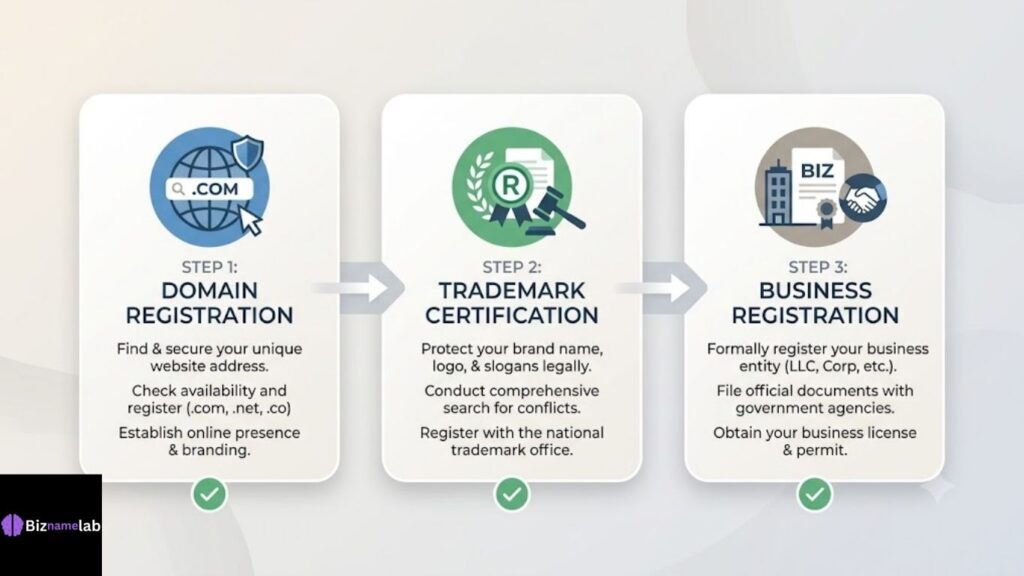
Once you’ve shortlisted a name, lock it down before someone else does. Skipping this step is the single most common regret agents report after a rebrand.
- Check domain name availability first — it’s the fastest way to eliminate names that won’t work online.
- Run a trademark search for real estate through the USPTO’s official trademark database to confirm no conflicting marks exist in your industry class.
- Complete your corporate business registration with your state, matching the exact legal name you’ll license under.
- Register your matching social media handles for real estate across the platforms your clients actually use.
- If you want help understanding the trademark process end-to-end, this guide on how to trademark a business name walks through it step by step.
- Explore more naming inspiration and tools at BizNameLab, or see how other industries approach it in this breakdown of fintech company names.
Key Takeaways
- Your name is a trust signal that directly affects high-ticket property transactions.
- Choose a name that scales from residential to commercial real estate brokerage and beyond.
- Avoid naming mistakes like trend-chasing, licensing conflicts, and unavailable domains.
- Your business name directly impacts Google Maps ranking and local SEO performance.
- Secure your domain, trademark, and social handles before you launch, not after.
Real Estate Naming FAQs: Legal & Business Advice for Brokers
Should I use my personal surname or a corporate group name?
Both work, and the right choice depends on your model. A surname (like “Ashford Realty”) builds a personal, trust-based brand that’s strong for solo agents and small teams. A corporate group name (like “Meridian Estates Group”) scales more easily when you plan to add agents, expand into property management and development, or eventually sell the business, since it isn’t tied to one person’s identity.
Is it mandatory to include words like ‘Realty’, ‘Properties’, or ‘Group’?
Not always, but it’s strongly recommended. Many states require local real estate licensing compliance rules that mandate industry-identifying language in your licensed business name so consumers immediately understand what you do. Even where it’s optional, including a word like “Realty” or “Properties” improves clarity for clients and helps with local search relevance.
How do I handle state licensing and legal trademark checks?
Start with your state’s real estate commission website to confirm naming rules for licensed brokerages — requirements vary by state. Separately, run a trademark search for real estate through the USPTO database to check for existing federal marks. These are two different checks: licensing confirms you can legally operate under the name, while a trademark search confirms you won’t infringe on another business’s protected brand.
Conclusion
The right name won’t close deals by itself, but the wrong one will quietly cost you the ones you should have won. Use this list of real estate business names as a starting point, run your favorites through the scalability and availability checks above, and lock in your domain and trademark before you build your brand around it. A name that sounds established today is the foundation for a brokerage that still makes sense five years from now.